
Football League 2026 logo

Football League 2026 Defending Guide: How to Stop Conceding Goals

Defend better in Football League 2026: positioning, jockeying, tackle timing, dealing with pace, and the team habits that make clean sheets repeatable.

Rated 4.5/5 · 31k

Every strong team is built on what it does without the ball. Players concede the same goals repeatedly, a winger isolated against a full back, a midfielder sprinting out and opening a lane, a tackle mistimed at the edge of the box, and each one is fixable once it is named.

This guide teaches defending as positioning first and tackling second. The best defenders in Football League 2026 win most of their battles before a tackle is needed, by standing in the right place and making the attacker choose the harmless option.

For the full set of mechanics around defending, begin with the Football League 2026 complete game overview, then work through the principles below in your next few matches.
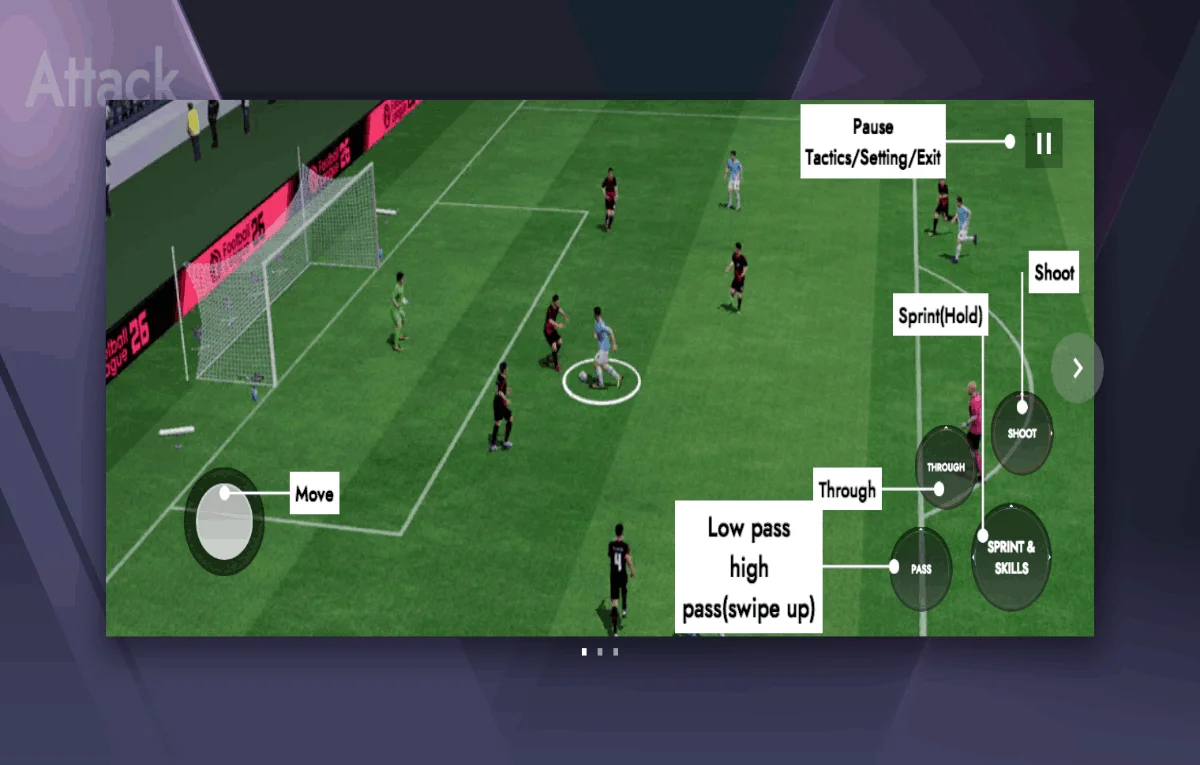

Positioning Beats Tackling

Your first job as a defender is to be between the attacker and the goal, goal side, at a distance that lets you react both ways. From that position the attacker must beat you; from a poor position you must rescue yourself, and rescues fail regularly.

Hold your position longer than instinct suggests. Most goals against come from a defender leaving the right place to chase the ball somewhere harmless, opening the exact space the attack was designed to exploit.

Judge your defending by the shots you prevent, not the tackles you make. A striker who passes backwards because your shape gave him nothing has been defended perfectly, and no statistic on the screen will record it.

Jockeying: The Art of Delaying

Jockeying means staying in front of a dribbling attacker, close enough to threaten the ball, far enough to react to a change of direction. Side on, knees bent, eyes on the ball rather than the attacker's feints, because feet lie and the ball cannot.

Delay is victory in most one on one situations. Every second you delay an attacker, teammates recover, the box fills, and the attack's timing dies. The impatient lunge is what the attacker is waiting for; patience is what he cannot solve.

Force the attacker onto his weaker side and toward the touchline when you can. Both reduce his options, and a winger squeezed against the line with his wrong foot is defending himself for you. The same discipline applies across Football League 2026: change one thing, watch honestly, and write down what the match actually said.

Home and away are different sports wearing the same rules. Travel, crowd and habit all tilt small percentages, and small percentages are the currency matches are settled in. Squads built with both versions in mind, rather than one idealised version, stop donating points in the fixtures nobody highlights.

When to Tackle and When to Wait

Tackle when the attacker takes a heavy touch, when he shows the ball while changing direction, or when support has arrived and the risk is covered. Those are the three honest windows, and they appear in every match for a defender patient enough to watch for them.

Never tackle from behind or from a position where a miss leaves you on the ground and the attacker alone. A standing challenge that delays is worth more than a sliding gamble that either wins the ball or loses the match in one motion.

At the edge of your own box, the rules tighten further: a foul there is a free kick in shooting range or worse. Football League 2026 tactics and formations and Football League 2026 controls guide covers the control inputs themselves; this guide's lesson is that timing, not force, is the input that matters. Players who approach Football League 2026 as a long campaign tend to build these habits early, and their squads show it by spring.

Defending Against Pace

Fast attackers beat defenders who turn slowly and position poorly, not defenders who are merely slower. Start a step deeper against pace, so the race begins from your position rather than from a standing start beside a runner already moving.

Show the winger the outside and protect the inside lane with your body shape. A runner forced wide must cross or cut back against his momentum, and both give your centre backs time to set themselves in the box.

When a ball is played in behind, your first step decides everything: turn and run the line toward your own goal immediately, then angle across. Defenders who watch the ball for half a second against pace never recover the ground that half second cost. None of this requires perfect Football League 2026 play; it requires decisions you can explain, repeated until they become instincts.

Football games are won in the spaces between the obvious moments: the midfielder's first touch that turns pressure into a pass, the full back's starting position that kills a counter before it breathes, the striker's curved run that drags a centre back two metres from where the cross will land. Training your eyes for those moments is the deepest skill any of these guides can offer, because the obvious moments take care of themselves.

Team Defending and Compact Shape

Individual duels matter less than the team's distances. When midfielders stay close to their defenders, attacks run into two lines; when the team stretches, one pass removes four players and the defence is sprinting backwards toward its own goal.

Communicate through positioning: the nearest player presses the ball, the next screens the pass into the striker, the rest hold the shape. That simple division, repeated calmly, is what organised defending actually looks like in a match.

After your team loses the ball, the first five seconds belong to the nearest players: slow the counter immediately, even without winning the ball, so the team can fall into shape. Most counter attacking goals are conceded in those five unmanaged seconds. When a result is unclear, the right response in Football League 2026 is a cleaner test and a calmer review, never a pile of random changes.

Settling Into a Clean Sheet Routine

Review your conceded goals by cause, not by blame: a lost duel, an opened lane, a set piece, a counter. Two matches of honest notes reveal a pattern, and the pattern tells you which section of this guide your next practice needs.

Practise jockeying and positioning in low pressure matches or training before judging yourself in hard ones. Defending skills are timing skills, and timing is built by repetitions at speeds you can control.

Clean sheets are habits wearing a result. Position first, patience second, tackles in their windows, and a team that stays compact: repeat those, and the goals against column improves on its own. Football League 2026 cannot make these decisions for you, but every match reports back on the ones you made, if you are willing to listen.

Fitness is a tactical weapon disguised as a physical one. A team that can press in the eightieth minute owns choices that a tired team simply does not have, and every training and substitution decision in a season is quietly a decision about which choices will exist when the match is decided.

Frequently Asked Questions

Because most conceded goals come from repeated causes: leaving position too early, lunging in one on ones, or slow reactions to counters. Note the cause of each goal for two matches and the pattern will name the fix.

Rarely, and only when the attacker shows the ball and a miss is covered by a teammate. A mistimed slide removes you from the play, so standing challenges and delay should be your default.

Start deeper, show them the outside, protect the inside lane, and turn immediately when the ball goes behind. Positioning beats raw speed when the defender begins from the right place.

Staying in front of the attacker at a reactive distance, side on, watching the ball, and delaying him until support arrives. It prevents more goals than tackling because it removes the attacker's options first.

Conclusion

Defending is patience organised into a system: hold your position, delay the attacker, tackle in the honest windows, and keep the team's shape compact enough that no single mistake becomes a goal.

Work on one cause at a time from your own conceded goals. A defence improves the way a wall is built, one sound layer at a time, and the clean sheets arrive once the layers hold together.

Marco Rossi

Reviewed by

Marco Rossi

Football Games Reviewer

Marco tests football games on real Android devices, playing full matches and career weeks to check controls, tactics and performance before any game is listed here.

More about Marco Rossi